
Free Credit Report Monitoring: Start Free Before You Pay
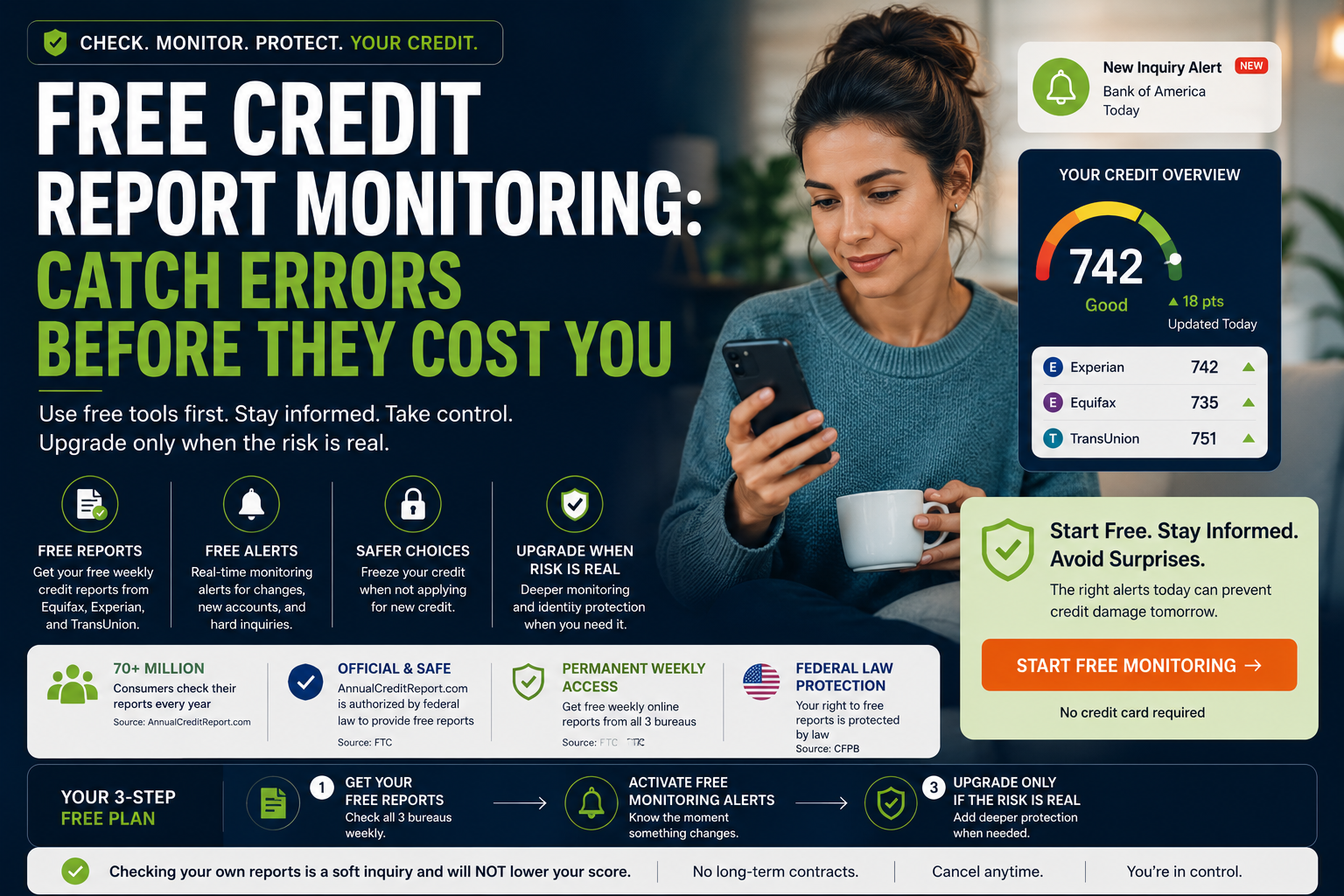
Catch credit report changes, hard inquiries, new accounts, errors, and fraud signs before you apply — using free tools first, then upgrading only when the risk is real.
Read the full guide →
You don't need another shiny credit card pitch. You need to know which monitoring plan actually catches fraud, which "free" tools quietly miss two of your three bureaus, and what to do before a small mistake shows up on your report for seven years.
No email required • No credit pull • Free

By Casey Lin
· Credit Education Lead
Casey has spent 6+ years testing credit monitoring and identity protection plans hands-on — signing up, triggering alerts, and cancelling — so readers don't have to gamble with their score or their wallet. Every review on UpTrendCredit is independently tested; we never accept payment for placement.
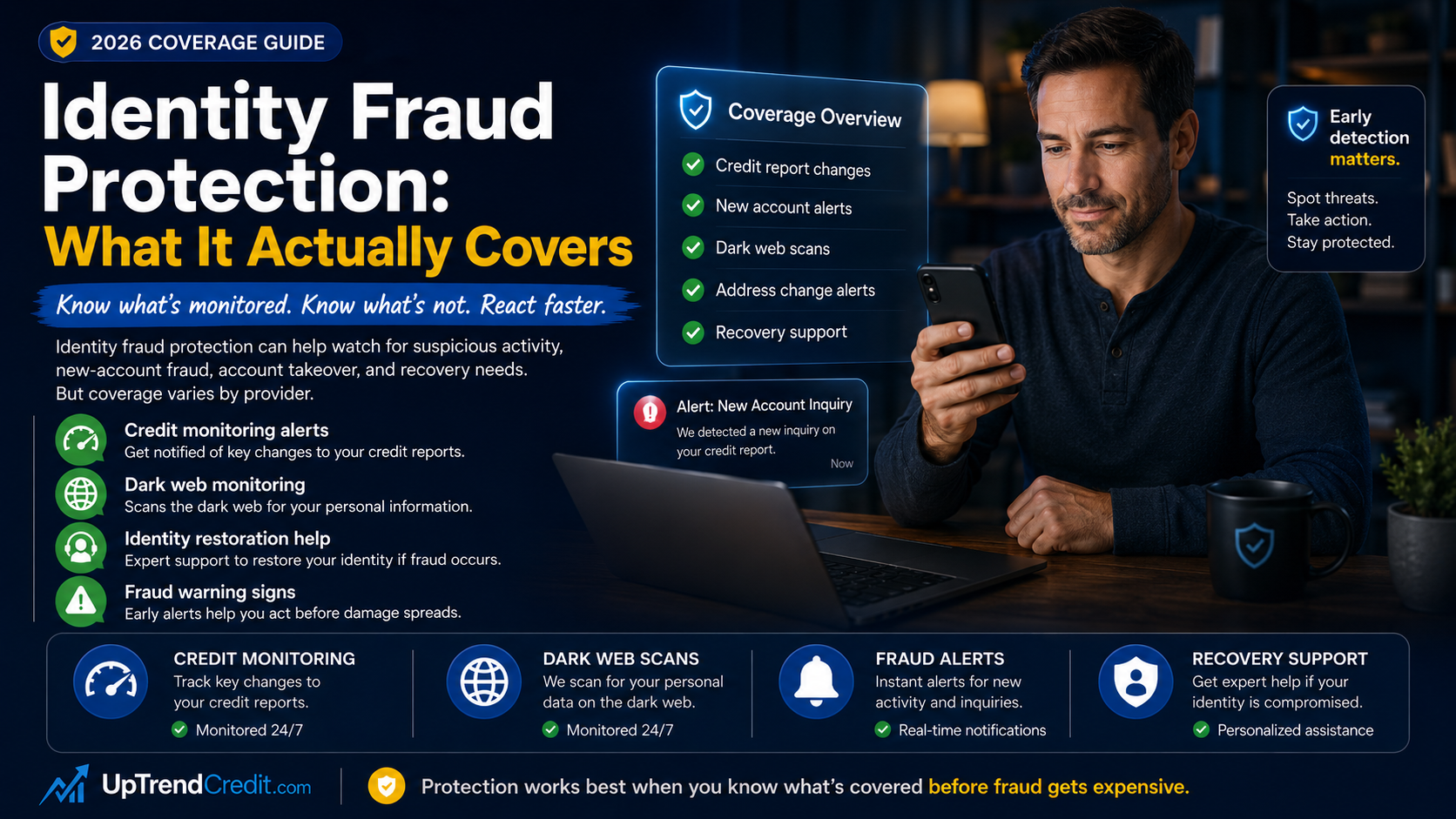
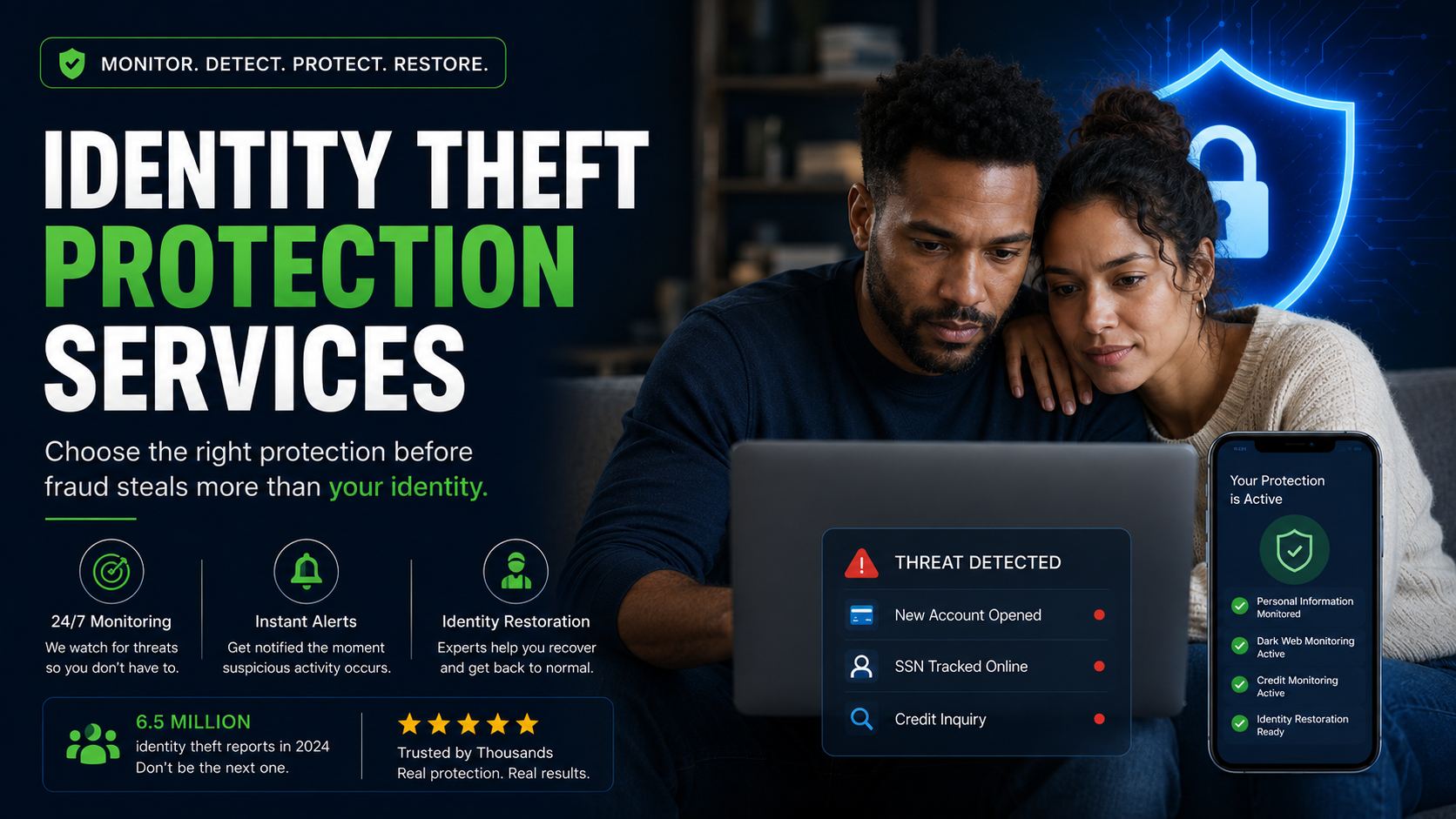
Credit monitoring is a paid or free service that watches your Equifax, Experian, and TransUnion credit files for new accounts, balance changes, hard inquiries, address updates, and public-record changes — then alerts you (usually within 24 hours) so you can catch identity theft, errors, or score drops before they grow. It is not the same as identity theft protection, which adds dark-web scans, SSN alerts, and recovery insurance on top.
Most people don't watch their credit until something breaks. By then, the cleanup takes months. Tap any number to verify the source.
On a $300,000 30-year mortgage, dropping from a 760 to a 660 FICO score can add roughly $60,000+ in interest over the life of the loan.
That's a missed payment, one wrong dispute, or a fraud account you didn't catch for 90 days. Monitoring isn't about paranoia — it's about not handing a stranger your down payment.
See which plan protects you →Two reads that solve the most common credit-monitoring questions.
Browse every guide by category — credit monitoring, identity protection, and credit building.
All categories: showing 7–10 of 10 · page 2 of 2
Building credit? Recovering from fraud? Just want peace of mind? One short quiz, no email.
We match you to credit-building tools, 3-bureau monitoring, or full ID-theft protection — based on what you actually need.
Pros, cons, and the gotchas every other site leaves out. Then decide on your terms.
“I'm scared I'll accidentally drop my score.”
Checking your own report won't move it a single point. We show you exactly which actions matter — and which are myths.
“I don't want to overpay for features I'll never use.”
Every review breaks down what's included, what's an upsell, and what's genuinely worth the monthly fee for your situation.
“What if I'm under-protected when fraud actually hits?”
We compare ID-theft insurance limits, recovery support, and alert speed — so you know what you're really getting before you sign up.
“Are these reviews just affiliate ads in disguise?”
No. We publish the cons even on services we recommend. If a plan isn't worth the money, we say so — by name.
“Your credit score is your reputation with money. Guard it the same way you'd guard your name.”
— Paraphrased from personal finance educator Dave Ramsey on the importance of monitoring your own credit file.
The questions readers Google most before picking a credit monitoring plan — answered straight.
Tip: bookmark AnnualCreditReport.com — the only source authorized by federal law to deliver your free weekly reports from all three bureaus.
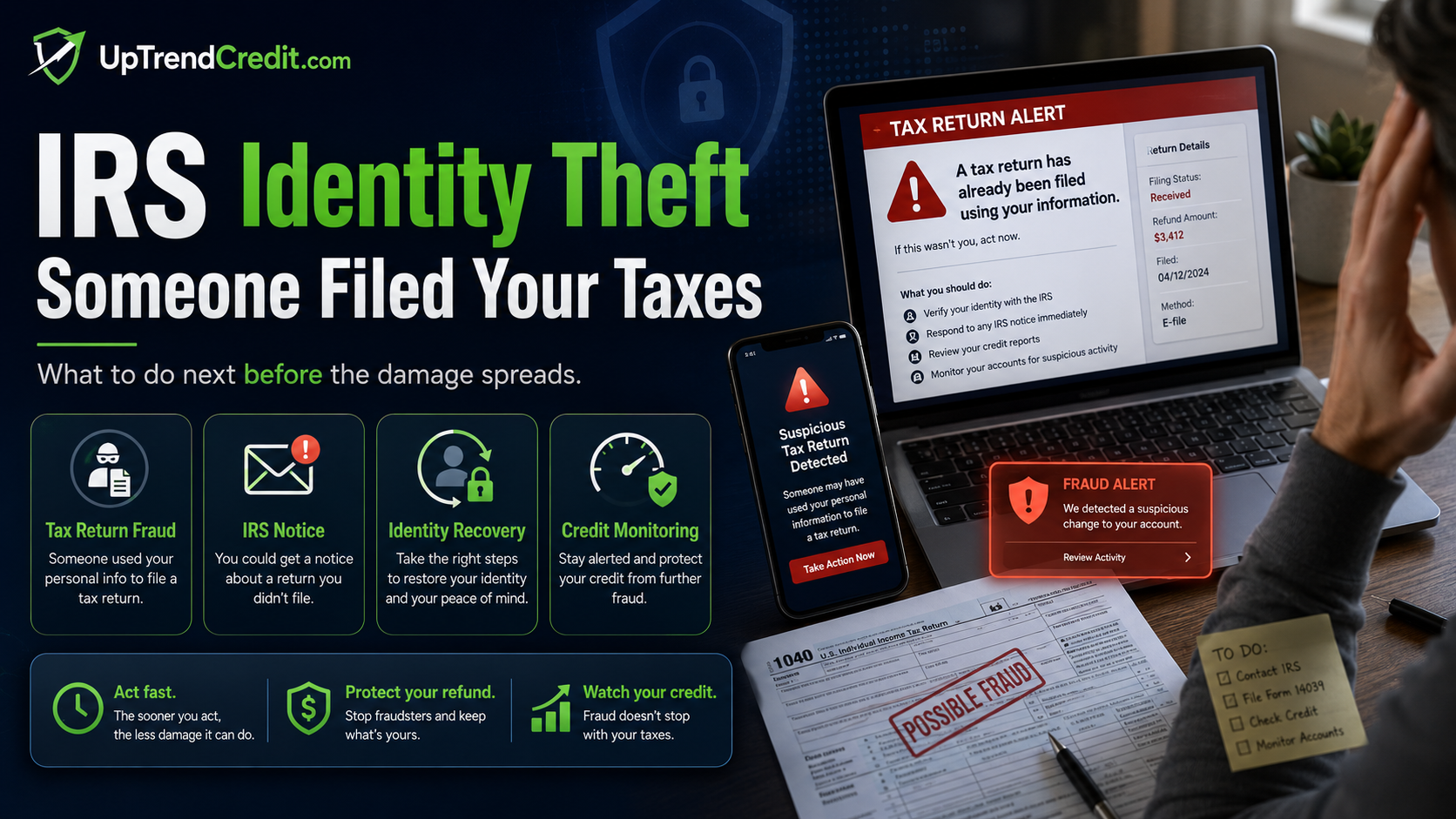
If you just saw a charge you didn't make, a credit alert you don't recognize, or a strange address on your report — stop scrolling and work this list in order. It costs $0 and shuts down most fraud before it spreads.
Freeze all 3 credit bureaus (≈ 5 min)
Free, instant, reversible. Blocks any new account from being opened in your name. Do Equifax, Experian, and TransUnion separately — a freeze at one does not freeze the others.
Pull all 3 reports free (≈ 2 min)
AnnualCreditReport.com is the only federally authorized free source — weekly access to all three bureaus. Skim for accounts, addresses, or inquiries that aren't yours.
Report identity theft to the FTC (≈ 2 min)
IdentityTheft.gov walks you through a free recovery plan and generates the FTC affidavit you'll need to dispute fraudulent accounts.
Change passwords on your email + bank first
Email is the master key — once a thief owns your inbox, every password-reset link goes to them. Reset email first, then bank, and turn on app-based two-factor authentication on both. Our 10-minute walkthrough shows the exact order.
Set up monitoring so you catch the next attempt
Pick a 3-bureau monitoring plan (the quiz matches one to your situation) so you get alerts in 24 hours, not 60 days from now when you check your report.
Not a lawyer or a substitute for one. If money has already left your accounts, call your bank's fraud line first.
Answer 6 quick questions and get a personalized credit monitoring recommendation — matched to your budget and your protection level.
No email • No credit pull • Independent recommendations